Right now...
Updated February 3, 2026
Surgery
I recently completed surgical residency, which was a demanding experience, often requiring 28-hour shifts and 80-hour work weeks.
I'm applying for sub-specialty fellowship training in advanced GI and abdominal wall surgery, the next step toward a career in academic surgery. In the meantime, I am working part-time as a general surgeon in south-central Pennsylvania — where my clinical activity is evenly split between robotic-assisted minimally-invasive elective surgery and emergency general surgery — and preparing for board-certification exams.
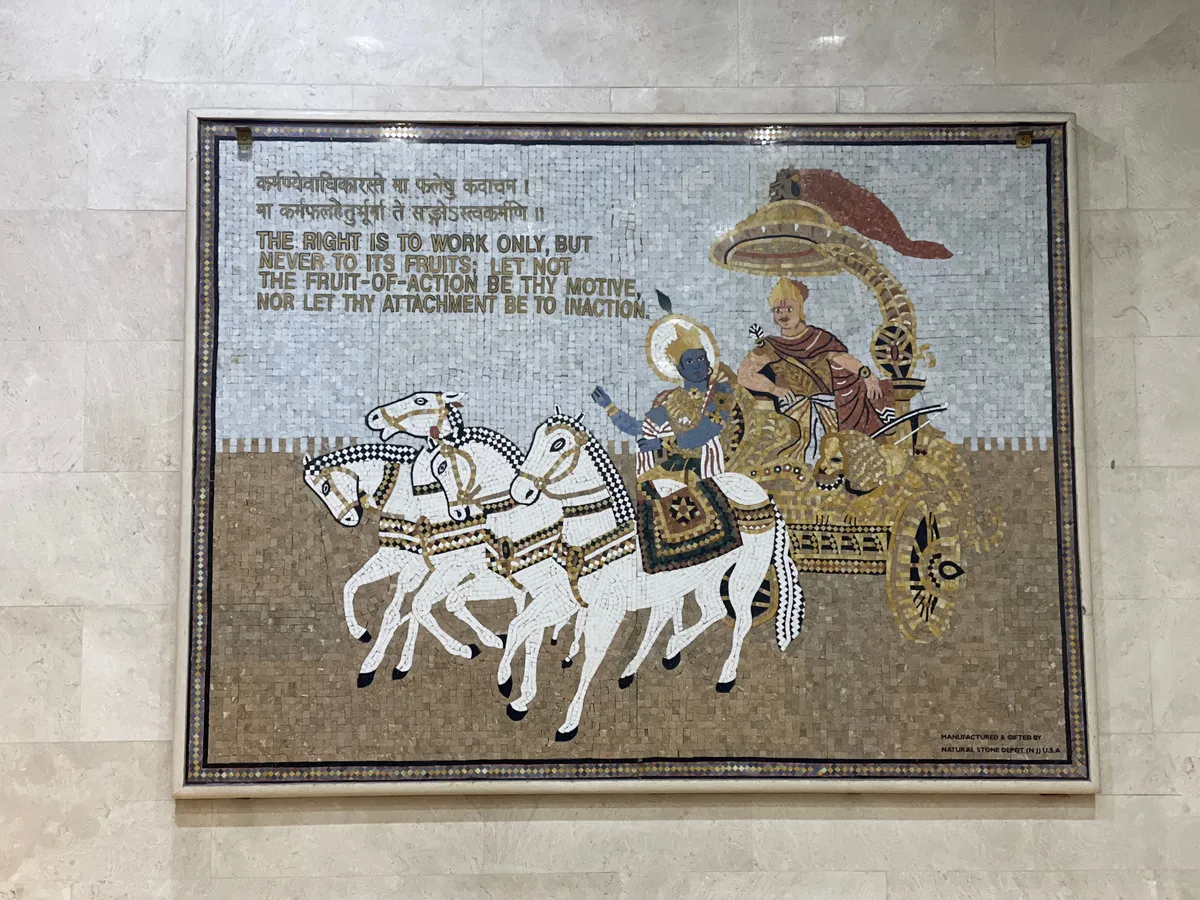
I find great meaning in the idea of surgery as my form of karma yoga 1 and in this passage from the Bhagavad Gita 2:
Research
I lead the Autonomous Surgery Working Group within the Robotics Committee of SAGES, where we are working to guide the development of safe and efficacious autonomous surgical robots.
Right now, we are developing taxonomic frameworks for assessing autonomy levels in surgical robotics. As machine learning-enabled surgical systems advance from assistive to autonomous capabilities, existing regulatory frameworks lack the standardized terminology and classification systems needed to evaluate these technologies.
Our group is creating a robust, categorical taxonomy to extend existing frameworks such as LASR, address classification challenges in current systems, and provide structured guidance for the regulatory assessment of autonomous surgical systems. This work builds on existing autonomy frameworks from fields such as autonomous vehicles and aviation while accounting for the unique safety and efficacy requirements of surgical applications.
Personal life
After graduating earlier this summer, I attended a silent meditation retreat in Mexico. This was an intense and transformative experience, full of unexpected and profound moments, and an opportunity to become grounded once more in jñāna 3.
Since returning, I have been spending much of my free time meditating, reading, practicing acoustic guitar, exercising, and writing. I have also been traveling as much as I can since the retreat, immersing in nature and reconnecting with loved ones.
As I begin my transition into gṛhastha 4, dharma (धर्म) and yoga (योग) continue to serve as the central philosophical concepts of my life. Non-dual vedantism 5 remains the focus of my spiritual study, and a great source of inspiration and serenity.
Visit my about page for more.
Karma yoga (
कर्म योग), or the path of unselfish action, is one of the three classical spiritual paths (yogas) mentioned in the Bhagavad Gita. Karma yoga is closely associated with the Hindu concept of seva (सेवा): the performance of selfless service without any expectation of reward.↩Told as a dialogue between a despondent man and God himself, the Bhagavad Gita synthesizes several millennia of Indian philosophy into an enduring summary of vedantic thought. It provides the most concise and accessible explanation of the foundational Vedic concepts of dharma (
धर्म) and karma (कर्म). I highly recommend Stephen Mitchell's translation of the Gita, a scanned PDF of which can be found here.↩Jñāna (
ज्ञान) roughly translates to "knowledge" or "self-knowing", though its true meaning is something closer to "that knowledge which is inseparable from the total experience of the all-encompassing divine reality of non-duality"↩Gṛhastha (
गृहस्थ) is the second of the four phases of Vedic life, the four Āśrama (आश्रम). It is preceded by brahmacharya (ब्रह्मचर्य), the student and bachelor phase of life, and followed by vānaprastha (वानप्रस्थ, "the way of the forest") and sannyasa (संन्यास, "renunciation [of the world]").↩There is no greater introduction to advaita vedanta (
अद्वैत वेदान्त) than the compilation of Sri Nisargadatta Maharaj's lectures published in English as I Am That↩